
Baking sheets are a crucial piece of equipment in every kitchen, regardless of whether you’re baking at home or studying pastry chef. Understanding the advantages and disadvantages will help you pick the right one, increase the baking performance and also ensure safety when cooking.
Sheets for baking cookies, baking sheets made of stainless steel and various other kinds of cooking sheets are readily available however each has its own pros and pros and. Choosing the right sheet for baking cookies, roasting vegetables or baking general purposes can make a difference and avoid the most common kitchen mistakes.
We will examine different types of bake sheets and as well as their distinctive advantages and drawbacks, as well as offer tips for maximising their utility for kitchen and baking.
What Is a Baking Sheet?
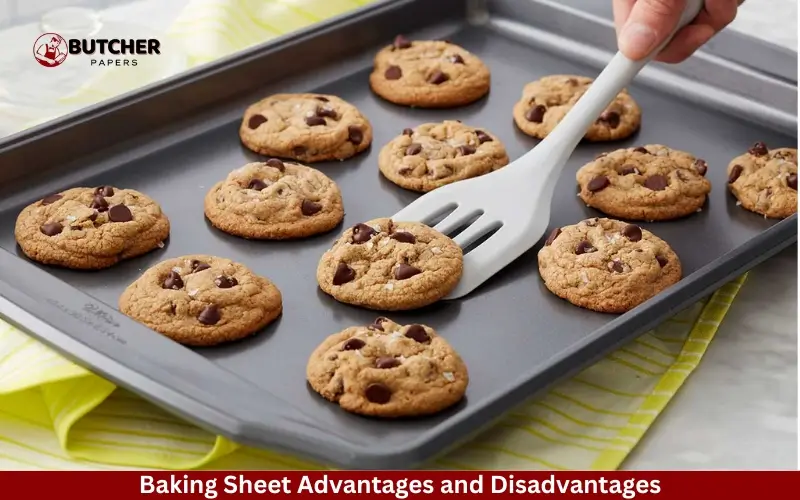
The baking sheet is also referred to as a cookie sheet or cooking sheet is a flat rectangular pan that is designed for use in the oven. Baking sheets usually have slightly higher edges (cookie sheets could or might not) to keep food in place and stop spills.
Materials: The majority of baking sheets are constructed of aluminum, stainless steel or non-stick coatings.
Size: They are available in different sizes and sizes, ranging from half-sheet pans for small kitchens, to full-size commercial sheets that can hold large quantities.
Uses: Baking cookies, roasting vegetables, toasting nuts, or making sheet pan dinners.
Utilizing the correct baking sheet will ensure even heat distribution, keeps food from sticking and makes cleaning easy.
Types of Baking Sheets
Standard Cookie Sheets
These are sheets that are flat with an elongated rim at the edges. They are ideal for:
- Bake cookies uniformly
- To toast bread, nuts and other items
- Making small pastries
Cookie sheets are generally light which makes them easy to handle. However, they can warp in high temperatures when they are thin.
Stainless Steel Baking Sheets
Bakeware made of stainless steel is robust and resistant to corrosion, rust and staining.
Advantages:
- Durable and durable
- Even heat distribution
- Can withstand high oven temperatures
Disadvantages:
- It is slightly heavier than aluminum.
- Might require a greasing or lining to avoid sticking
These sheets are great for those who are new to cooking as well as professionals seeking reliable, long-term kitchen equipment.
Non-Stick Cookie Sheets
The non-stick sheets of cookies are decorated with a coating to stop food from sticking to the sheet without additional oil.
Advantages:
- The only requirement is parchment or oil.
- Easier cleanup
Disadvantages:
- The non-stick coating can wear off in time
- Not suitable for use with broilers.
Baking Sheet Advantages
Knowing the benefits of baking sheets can help you make educated decisions:
even distribution of heat – Many high-quality baking sheets are able to distribute heat evenly, which means that bread, cookies, and roast vegetables cook evenly.
Versatility – Baking sheets are great to bake cookies for toasting, roasting, toasting and even meals made with sheet pans.
Durability – The rust-proof stainless steel or the heavy-duty aluminum sheets will last for a long time when properly maintained.
Easy Cleanup – Non-stick sheets and parchment lined sheets help with cleanup.
The ability to move Easy to take into and out of ovens even when you are handling several tray.
The use of parchment paper or baking mats made of silicone on baking sheets can increase their utility, and some suppliers such as Butcherpapers.com have special papers that will fit on most cookie sheets precisely.
Baking Sheet Disadvantages
While baking sheets can be very useful, they have certain disadvantages to be aware of:
Warping – Poor-quality or thin sheets can be warped under extreme heat and affect the baking result.
Sticking – If there isn’t enough grease or liner, pastries and cookies may stick, particularly on aluminum or stainless steel sheets.
Weight – The heavy-duty sheets can be a burden for home bakers.
Cost – Commercial-grade stainless steel or high-quality stainless steel sheets can be costly.
Maintenance – Non-stick coatings can degrade over time and require regular cleaning.
Being aware of the disadvantages will help you avoid common baking problems and prolong the lifespan of your sheets.
Tips for Choosing the Right Baking Sheet
If you are looking to purchase baking sheets or a cookie sheet, think about these things:
Material: Aluminum is hotter, while stainless steel is tough and non-stick stops sticking.
Thickness: Sheets with a greater thickness resist warping.
Size: Check that it’s suitable for your oven as well as the amount of food items you wish to bake.
Edges Sheets with rounded edges are ideal for roasting. Flat cookie sheets are ideal for baking cookies.
Maintenance: Look into dishwasher-safe options for your convenience.
The use of high-quality baking sheets can have a dramatic impact in the baking process, particularly when used with specialty papers or parchment such as those available from Butcherpapers.com.
Common Uses for Baking Sheets
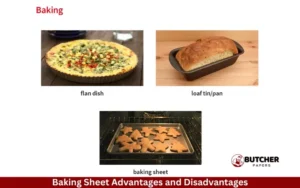
Baking sheets can be used as kitchen appliances. The most common uses are:
Baking Cookies: Even heat ensures golden, uniform cookies.
Roasting Vegetables: Spread your vegetables in one layer to ensure optimal browning.
Sheet Pan Meals: Mix together protein and vegetables to prepare quick meals.
Toasting Nuts or Bread: Flat sheets aid in achieving uniform toasting.
Pastries and Pies: Use mats made of parchment or silicone to avoid sticking.
The investment in several sheets lets you cook a variety of dishes at the same time without cross-contamination.
Related Article: Paper for Bakery A Complete to Baking Papers
Related Article: Parchment paper Benefits, best practices for baking and cooking
Related Article: Parchment Paper Non-stick, heat-resistant & food-safe baking sheets
Conclusion
Knowing the advantages and disadvantages enables bakers to make better decisions when it comes to cooking. While baking sheets offer uniform cooking, versatility and durability, there are possible drawbacks such as sticking and warping or the weight of the sheet should be taken into consideration.
Selecting the correct type of stainless steel non-stick, rimmed, or cookie sheet, paired by parchment or special liners from Butcherpapers.com will ensure that your cooking and baking is efficient as well as safe and enjoyable.
Making the investment in high-quality baking sheets will not only enhance the efficiency of your kitchen but ensures better results with pastries, cookies, roast vegetables and sheet-pan meals. If you are aware of the benefits and disadvantages, any professional cook or home cook can make the most of their equipment and make perfect meals every time.
FAQS
What’s the distinction between a baking sheet and a cookie sheet?
The cookie sheets are flat and have an elongated rim that is intended for cookies. On the other hand, a baking sheet usually has more edges to bake or roast other things.
Do I need baking sheets made of stainless steel to bake cookies?
Yes, but you should consider using mats made of parchment or silicone to avoid sticking.
Are baking sheets of cookies always non-stick?
Not necessarily. Some are pure metals; others contain non-stick coatings. The use of parchment paper for lining is a good option.
How can I stop getting my baking sheets to stay from warping?
Choose sheets that are heavier and of superior quality and beware of extreme oven temperatures that are not in line with the recommendations of the manufacturer.
Are baking sheets suitable to roast meat and vegetables?
Absolutely. Baking sheets with ridges are perfect for roasting and sheet-pan meals.