
| Feature | Details |
| Cooking Method | Microwave |
| Preparation Time | 2–5 Minutes |
| Cooking Time | 3–8 Minutes |
| Total Time | 5–12 Minutes |
| Difficulty | Easy |
| Best For | Quick Family Meals |
| Fresh or Frozen | Both |
| Cleanup | Minimal |
Why Microwave Corn is so Popular
It is convenient to microwave corn. You can cook delicious corn in minutes without waiting for the water to boil. Microwaves create steam inside the corn kernels, which allows them to be cooked evenly and moistly. This helps to preserve sweetness and reduces overcooking.
This method is preferred by many busy families because it involves fewer dishes and requires less preparation. This is a great option for kitchens, apartments, offices, and dorms, where grilling may not be practical. Microwaving is a better option than boiling because it keeps the flavor in the kernels.
The Benefits of Microwave Cooking Corn
The microwave has many practical benefits beyond its speed.
- It’s faster than grilling or boiling
- Clean up is minimal
- Retains natural sweetness
- Water usage is reduced
- Perfect for small kitchens
- Simple for beginners
Consistency is another major benefit. Once you have the right cooking time, you can prepare corn perfectly every time. You can cook corn in the microwave by cooking one ear at a time or multiple ears. This makes it perfect for family meals as well as individual meals.
How to Choose the Best Corn
High-quality corn is the foundation for great results.
Find ears with bright green husks tightly wrapped around the corn. Silk should be slightly moist, not dry and brittle. Avoid corn that has brown, damaged or moldy husks. The husks of older corn will often be dry, as it has lost moisture.
If possible, feel the kernels gently through the husk. The kernels should be firm, full and evenly distributed from top to bottom. Fresh corn has the best flavor, as the sugars are not yet converted into starch.
Fresh vs Frozen Corn
Fresh corn has the best texture and flavor. The kernels are tender and juicy even after cooking. The convenience of frozen corn on the cob throughout the entire year is another reason to choose it. The majority of frozen products are packaged soon after harvesting, which helps preserve the quality.
The cooking time varies slightly depending on if the corn is frozen or fresh, but both produce great results when cooked properly.
Can you microwave corn with the husk on?
The husk is often left on when cooking. The husk helps to maintain moisture and cook the corn evenly by creating natural steam. Allow the corn to cool down for a few moments before carefully removing the husk.
Wrap the corn in damp paper towels if the husk is already removed. This will prevent the corn kernels from drying during cooking.
Cooking Instructions
It is easy to prepare Microwave Corn On The Cob and only requires a few pieces of equipment.
Cook with the Husk
Trim only the excessively long silk that hangs from the end. Place the ear on a plate that is microwave-safe and cook it according to your microwave’s wattage. After cooking, allow the ear to rest for a few minutes before removing it with oven mitts and a kitchen towel.
Cook Without Husk
If the husk is already removed, wrap every ear in damp paper towels and place them on a plate that can be heated in the microwave. Cook until tender. If necessary, turn the ear halfway through to ensure even heating.
Microwave Cooking Time Table
The microwave wattage and the amount of corn, whether it is frozen or fresh, all influence the cooking time. Microwaves with higher wattages cook food more quickly, whereas models with lower wattages may require an extra minute. Start by following the recommended time, and then add short intervals to the cooking time if the kernels have not become tender.
| Number of Ears | Fresh Corn (Husk On) | Fresh Corn (Husk Off) | Frozen Corn |
| 1 Ear | 3–4 minutes | 4–5 minutes | 5–6 minutes |
| 2 Ears | 5–6 minutes | 6–7 minutes | 7–8 minutes |
| 3 Ears | 7–8 minutes | 8–9 minutes | 9–10 minutes |
| 4 Ears | 9–10 minutes | 10–11 minutes | 11–12 minutes |
Let the corn rest after cooking for 2 to 3 minutes. The kernels are cooked by the trapped steam.
How To Tell If Corn Has Fully Cooked
The perfect corn will have yellow kernels, which are plump and juicier. If you gently press a corn kernel with a fork it should release some juice, but still be firm enough to maintain its shape.
Microwave the corn again for 30-60 seconds if the kernels are still hard or dry. Overcooking corn can cause the kernels to become chewy.
Signs that Corn is Perfectly Cooked
You can easily determine if the corn is ready for serving by performing a few simple tests.
- The kernels are glossy and tender.
- The whole cob is hot.
- When lightly pressed, the kernels release juice.
- Corn has a sweet, natural aroma.
How to season corn
Microwaved Corn on The Cob has the advantage of being able to be paired with different flavors. Simple seasonings will enhance the sweetness of the corn without overwhelming it.
Classic Butter with Salt
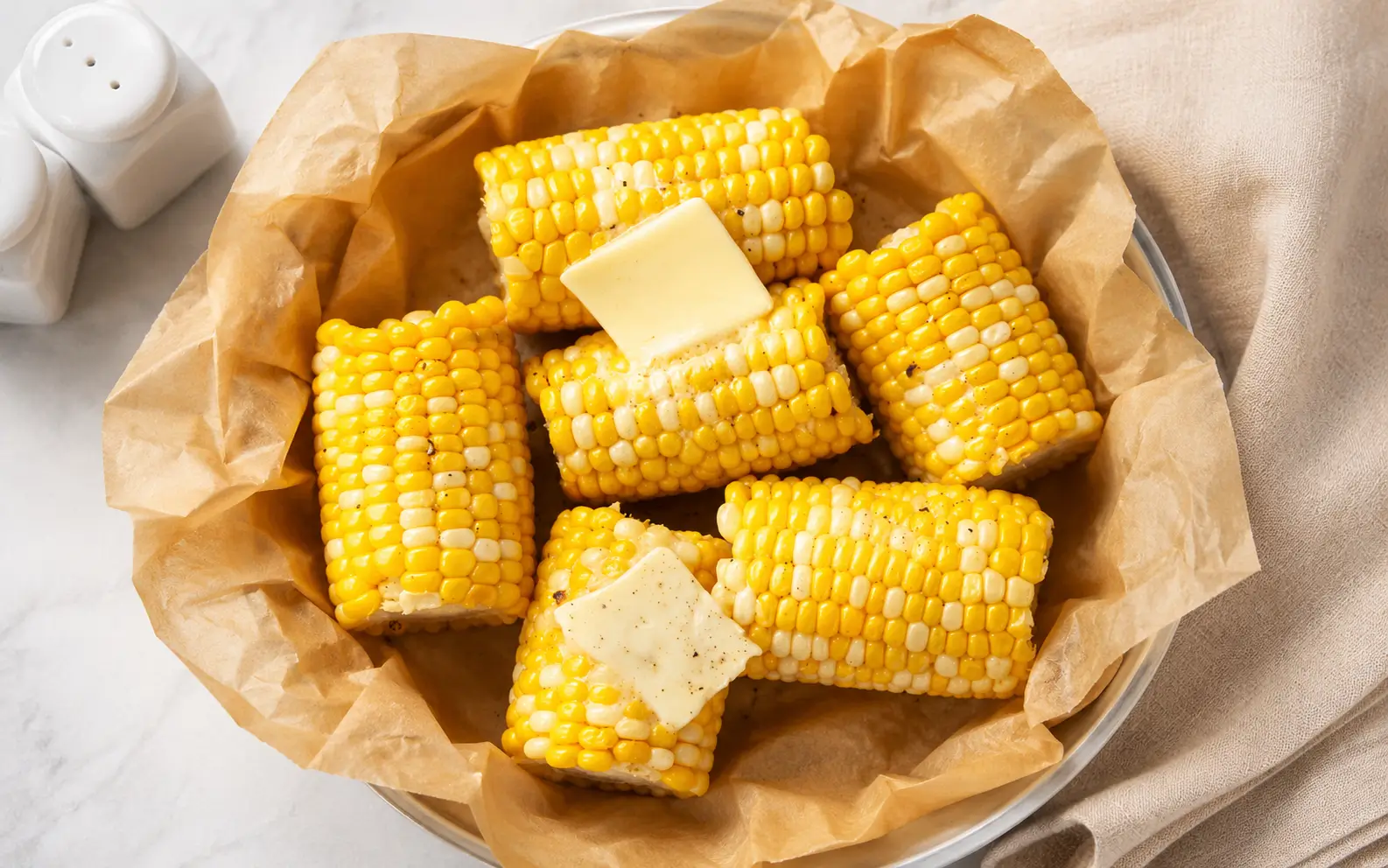
Spread butter on the corn as soon as it is hot, so that it melts in every kernel. Add a dash of freshly ground black and sea salt for a classic flavor.
Garlic Herb butter
Melted butter, minced garlic and chopped parsley are mixed with a pinch of pepper, black pepper, thyme and a pinch or two of black powder. Before serving, brush the mixture over the corn evenly. This mixture is great with grilled meats or seafood.
Parmesan and Herbs
Freshly grated Parmesan adds a rich and savory taste. Sprinkle parsley, basil or chives over the warm corn. The heat melts the cheese slightly and creates a tasty coating.
Mexican Street Corn Style
Spread mayonnaise on the corn and add cotija crumbles, lime juice, chili powder, and cilantro. This variation is creamy, tangy and slightly spicy.
Can you microwave corn without the husk?
Yes. Wrap each ear with a moist paper towel if the husk is already removed. Place it on a plate that can be heated in the microwave. Moisture creates steam which helps the kernels remain juicy while cooking.
To ensure an even heat, turn the corn half way through cooking. If the paper towel is dry, dampen it lightly before continuing.
Avoid these Common Mistakes
Even though microwaving corn may seem simple, it can have a big impact on the end result.
- The kernels become tough if they are cooked too long.
- Ignoring to allow the corn to rest after it has been microwaved.
- Use a paper towel that is dry instead of one that is damp.
- The fresh flavor of corn can be reduced by seasoning it before cooking.
By avoiding these mistakes, you can produce consistently delicious results.
Food Safety Tips
Microwaving corn is generally safe, but adhering to basic food safety principles helps maintain freshness and quality. If dirt can be seen on the husk, wash fresh corn before cooking. Avoid using containers not designed for high temperatures and use only microwave-safe dishes. Handle corn that has just been cooked carefully as escaping steam may cause burns.
It is important to keep cooked corn refrigerated if it has been left out at room temperature longer than two hours. This will help reduce the chance of bacteria growing.
Reheating Leftover Corn
You can reheat leftover corn in the microwave. Wrap the corn ear with a moist paper towel, and heat for approximately one minute. Continue heating at 20-second intervals if necessary.
Add a small amount butter to the dish before reheating. This will help restore moisture and enhance flavor.
Does Microwaving Have an Impact on Nutrition?
Microwaving has been found to be one of the most effective methods for preserving nutrients, as it is quick and uses less water. The vitamins that are sensitive heat and water loss, are better retained by microwaving than prolonged boiling.
Natural corn contains minerals like magnesium and potassium, as well as dietary fiber and antioxidants. By preparing it in the microwavable, you can enjoy all of these nutrients without spending time in the cooking.
How to store leftover corn on the Cob
When you have leftover microwave corn on the cob, it is important to store it properly in order to maintain its texture and flavor. Let the corn cool down to room temperature, then place it in an airtight jar or wrap it tightly in food-safe paper. To keep the corn fresh and safe, refrigerate it within two hours after cooking.
When stored correctly, cooked corn can stay fresh in the fridge for 3 to 5 days. Keep moisture in the container to prevent the kernels drying out.
Can you freeze cooked corn?
Yes. It is easy to freeze cooked corn and enjoy it later. Wrap each cooled corn ear in freezer-safe papers or place them in a freezer safe storage bag before freezing. Label the package to make it easier to track.
The quality of frozen cooked corn is maintained for as long as 6 months. To reheat corn directly in the microwave, simply thaw overnight in the fridge or microwave it.
The Best Ways to Eat Corn on the Cob
The versatility of corn is unmatched and it complements many different meals. It goes well with grilled or oven-cooked food, whether you are preparing for a family gathering or a casual dinner.
Some delicious serving ideas include:
- Grilled steaks or barbecue chicken
- Sandwiches and hamburgers
- Smoked Brisket
- Salmon or shrimp are examples of seafood
- Fresh garden salads
- Baked potatoes
- Pasta dishes
Addition of fresh herbs, butter flavored with flavor, or cheese grated can enhance the appearance and taste without adding extra time to cook.
How to Choose the Best Food Wrapping Material
Proper wrapping after cooking helps to preserve freshness, if corn isn’t served right away. Wrapping products that are food-safe can be used for picnics, catering and takeout.
Quality food wrapping paper is a great way to keep food clean and make it easier to handle. Depending on their application, butcher paper or deli paper, wax paper or parchment paper can be used to wrap prepared foods or serve them. The material to use depends on how the food is going to be served, stored or reheated.
Conclusion
Microwave Corn On The Cob offers a quick and easy way to cook fresh, sweet corn that is tender without having to boil water or fire up the grill. The microwave corn on the cob requires little preparation, cooks fast, and produces consistent results if you use the right timing. You can create a delicious side dish within minutes by using fresh corn, cooking it according to the recommended times, allowing ears to cool after microwave, and adding simple seasonings. The right storage and reheating methods can also reduce food waste, while maintaining its quality.
This simple method of cooking is convenient without sacrificing flavor. This article will give you the guidance and tips to ensure that your corn on the ear is always cooked perfectly.
Frequently asked questions
How much time does it take to microwave corn on the cob?
The microwave can cook fresh ears in 3 to 6 minutes depending on the power and if the husk is still on.
Do I need to remove the husk from my rice before microwaving it?
No. The husk helps to trap steam and keep the kernels moist. It also makes it easier to remove the silk after cooking.
Can frozen corn cobs be microwaved?
Yes. Yes.
Is corn microwaved healthy?
Yes. The corn will retain many vitamins, minerals and antioxidants when you microwave it.
Why is my corn chewy
Overcooking is the most common cause of chewy corn. Reduce the cooking time, and let the corn rest after it has been microwaved to improve the texture.
Can the corn be seasoned before cooking?
To preserve the natural sweetness of corn, it is best to add herbs, butter and seasonings to the cooked corn.
Can I reheat cooked corn?
Yes. Wrap the corn in damp paper towels and microwave in short intervals to heat it through.
How much time can cooked corn be stored in the fridge?
In the fridge, properly stored corn will stay fresh for 3 to 5 days.
Which container is best for storing corn leftovers?
A tightly-wrapped food-grade paper or an airtight container made of food-safe material will help keep corn fresh and prevent moisture loss.
Can I cook multiple ears at once
Yes. Yes.