
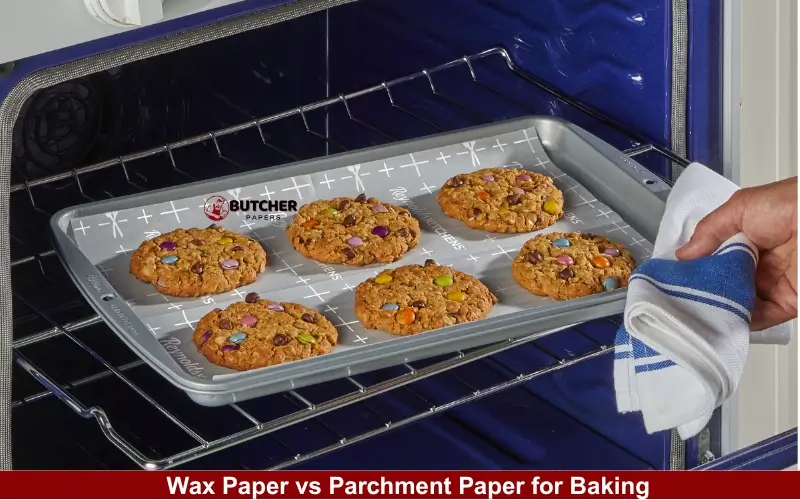
The baking precision is dependent on the right ingredients. The most sought-after kitchen-related comparison is today’s parchment paper vs wax paper to bake with. While both look alike and are usually sold close to one another in supermarkets but they’re not comparable. The coatings, the heat resistance, the levels of safety, and baking capabilities differ greatly.
The wrong type of paper used in the oven can result in burning, smoking or sticking and ruin recipes. When baking at your home, or in a commercial kitchen, being aware of this distinction will protect the food’s quality and ensure that your food is cooked safely.
This detailed guide provides information on the composition of the product, its temperature limits, baking safety, baking performance, environmental impacts and commercial usage aspects to help you make the right choice.
Why Understanding the Difference Matters
Many people think that wax paper and parchment paper serve similar functions since they are non-stick, thin sheets. But their manufacturing processes are entirely different.
In baking, resistance to heat is essential. Temperatures in ovens typically range from 325degF up to 450degF. Anything exposed to this amount of heat should be in a stable state and be non-reactive. In comparing wax paper with parchment paper used for baking, the degree of heat tolerance is the primary aspect.
Professional kitchens do not use them as alternatives. Making the right choice will ensure uniform texture, proper browning in addition to safe cooking.
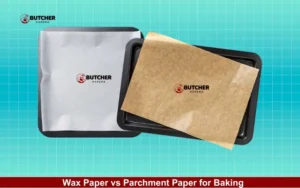
What Is Wax Paper
Wax paper is a standard paper that is coated on both sides with a fine layer of paraffin. The wax provides a water-resistant and non-sticky surface at room temperature.
It is typically employed for wrapping sandwiches, separating hamburger patties as well as covering the counter tops when dough is being prepared, Wax Paper vs Parchment Paper for baking and for storage of baked items. The barrier of wax prevents the sticking of food items and also reduces loss of moisture in cold applications.
But, wax paper was not made for oven use. Paraffin wax melts when heated to low temperatures when compared with baking. When it is baked it can melt, evaporate, smoke and then transfer the leftovers onto food or trays. This can alter flavor and raise safety concerns.
Therefore, wax paper should not be used for baking.
What Is Parchment Paper
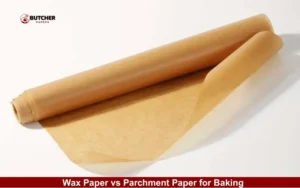
Parchment paper is made by cellulose fibers, which undergo special treatment to increase strength and heat resistance. The majority of parchment papers are coated with a thin silicon layer, which gives non-sticking properties even in extreme temperatures.
Contrary to wax paper, parchment papers are specifically designed for baking and cooking. The majority of brands are oven-safe between 420degF to 450degF but the precise temperature limits must be checked on the packaging.
In commercial and home kitchens the parchment paper is commonly utilized to line baking pans and bake sheets and roasting trays as it allows for a smooth release and makes cleanup easier.
Wax Paper vs Parchment Paper for Baking: Side-by-Side Comparison
| Feature | Wax Paper | Parchment Paper |
| Coating | Paraffin wax | Silicone |
| Oven Safe | No | Yes |
| Heat Resistance | Not resistant to heat. | Typically 420-450degF |
| Best Use | Wrapping and cold storage | Baking or roasting |
| Reaction to Heat | It melts and can smoke. | Darkens but remains stable |
| Non-Stick Performance | Room temperature is only | Effective under oven heat |
| Commercial Baking | Not the right fit | Industry standard |
This table clearly demonstrates that using wax paper or parchment paper to bake with isn’t an issue of preference. It’s about proper use and security.
Can Wax Paper Be Used in the Oven
The wax paper should not be employed in ovens in any way. Even at lower temperatures the wax coating could melt. Many people believe that placing air fryer parchment paper wax paper in a pan will make it safer; however, heat transfer could still result in smoke and melting.
Food safety experts and manufacturers don’t recommend using wax for baking. If there is heat involved the parchment paper is the right option.
Baking Performance Comparison
When baking cookies parchment paper helps dough to spread evenly, while keeping it from sticking. It helps ensure uniform browning and is easy to remove without damaging fragile edges.
In baking cakes, lining the pans’ bottom with parchment paper will ensure a clean release. This is crucial for cakes that are layered and commercial bakery productions where presentation is important.
When roasting fish or vegetables the parchment paper Will Parchment Paper Burn in the Oven helps prevent grease buildup on the trays, and helps in reducing the time for cleaning.
Wax paper can be used for cooling baked goods temperatures at room temperature, however it shouldn’t be exposed to heat from ovens.
Understanding the difference between parchment paper and wax baking paper can prevent the use of ingredients and unsatisfactory results.
Heat Resistance and Safety Standards
The majority of parchment paper is safe from 400degF – 450degF. If it is slightly over it will darken or crack, but is not likely to melt as wax paper.
Wax paper is made up of paraffin wax, which is made from petroleum. Its melting point is below the baking temperature, which makes it unsuitable for baking.
In commercial kitchens, choosing an appropriate baking paper that is heat-resistant is more than just a matter of ease of use. It is a way to ensure food safety compliance and the highest standards for professional kitchens.
Environmental Impact
Many types of parchment paper are available in non-bleached and compostable varieties. Certain are made of ethically sourced materials that break down faster when composted.
The wax paper, because of its wax-coated surface, is typically not recyclable and is often not compostable.
In comparing wax paper vs. parchment paper to bake from a sustainability viewpoint, parchment paper typically is the greener option.
Cost Considerations
The wax paper is generally cheaper as parchment. It is however not able to substitute parchment paper for baking applications.
Making use of wax paper to cut down on costs while baking can result in food being destroyed and health hazards. Parchment paper can cost a little more, but its durability and heat resistance justifies the cost.
Commercial kitchens usually purchase large quantities of parchment paper to ensure cost effectiveness and ensure consistent quality.
Common Mistakes to Avoid
A common error is to think the two items can be interchangeable since they appear like each other.
Another error is to believe that wax paper is safe when lightly greased. It’s still a matter of exposure to heat and melting may occur.
Bakers who do not adhere to the temperature limitations for parchment packaging. While it’s heat resistant parchment paper is not recommended, it is not recommended to be stored in direct fire or used in excess of the specifications of the manufacturer.
A thorough understanding of parchment paper vs wax baking parchment will help you avoid the risk of making these mistakes.
Why Professional Bakeries Choose Parchment Paper
Professional bakeries depend on parchment paper to bake with. It increases efficiency in workflow and reduces sticking. It also ensures the same results, and makes it easier for cleaning.
Consistency is crucial in baking facilities for commercial use. High-quality parchment paper guarantees the smoothest production process and greater satisfaction of customers.
Paper parchment is not an option for baking professionals. It is a must-have item.
Final Verdict
The contrast between parchment paper and wax paper used for baking brings an obvious conclusion. The parchment paper is designed for baking and heating applications. Wax paper is specifically designed for use in cold temperatures and at room temperature.
The use of wax paper in an oven may create smoke, melt residue, and other dangers. Parchment paper has secure, reliable and non-stick properties under baking temperatures.
If you bake a few times at home or run commercially, selecting the right paper will protect your equipment, recipes and the overall outcome.
Frequently Asked Questions
Does wax paper work in the oven with low temperatures?
No. Wax paper isn’t safe to bake at any temperature.
What temperatures can parchment paper be able to handle?
The majority of parchment paper brands are safe from 350degF-450degF. Always verify the packaging for a precise limit.
Is parchment paper reusable?
Yes, it is possible to be used again for several batches provided it isn’t burnt or lubricated.
Does parchment paper impact the baking time?
It doesn’t significantly alter baking time, but does improve heat distribution.
Which paper is better for baking commercially?
Parchment paper is the preferred and safe option for all baking tasks.