
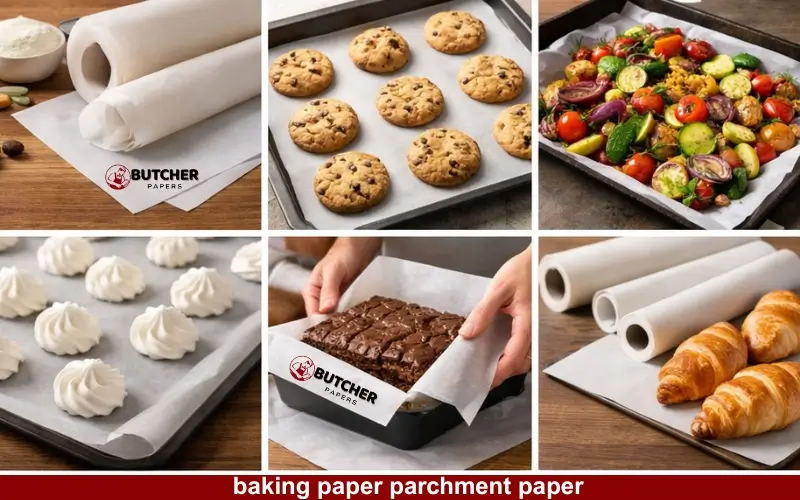
Selecting the right food-grade paper in professional kitchens or modern home baking environments is no small decision. The difference between baking paper and parchment directly impacts cooking performance, food security, sustainability and operational efficiency.
Despite the fact that many people use these terms interchangeably with baking paper, they are designed differently. Understanding their properties will ensure better results when baking, wrapping food, or preparing commercial food.
This guide will help both professionals and home cooks make informed choices by explaining the technical differences and performance standards.
What is Baking Parchment?
Baking parchment paper, known as greaseproof paper, is a common term. It is intended for cold applications and food wrapping, rather than for direct baking. The parchment is not coated with silicone-based nonstick.
The best parchment is biodegradable, compostable and recyclable. Most premium manufacturers produce PFAS free parchment, which means that no fluorochemicals were used in the manufacturing process. This makes it ideal for professional kitchens, where food safety and environmental responsibility are important.
The parchment does not work well for baking in the oven because it is non-stick and has a low heat resistance.
What is Baking Paper?
The baking paper is designed specifically for use in the oven. The baking paper has a silicone coating on both or one side, which provides excellent non-stick properties and grease resistance.
Baking paper parchment paper is characterized by its ability to resist high temperatures. They are therefore suitable for use in ovens, microwaves and some grill applications.
This heat resistance is used in commercial baking to ensure that pastries, breads, cookies and other baked goods are easily removed from trays, without sticking or tearing.
The Differences between Baking Paper and Baking Parchment
Understanding structural differences helps you determine when to use each product.
| Features | Baking Parchment | Baking Paper |
| Non-Stick Surface | No, | Yes (Silicone coated) |
| Heat Resistance | Limited | 230degC/446degF |
| Best Use | Food Wrapping | Oven baking |
| Composability | Biodegradable | Industrial compostable |
| Reusability | Limited | Often reusable depending on use |
The main difference is the heat resistance. Baking parchment paper is designed for high temperature cooking. Parchment is more suitable for handling and wrapping food.
Performance in Professional Kitchens
Material reliability has a direct impact on productivity in high-volume environments. Baking parchment paper helps to maintain consistency by preventing sticking Parchment Paper Non-stick, heat-resistant & food-safe baking sheets and reducing tray-cleaning time.
The moisture retention properties of the baking paper parchment paper
The product also helps to improve baking results, as it maintains optimal humidity levels during cooking. It helps the pastries to rise and prevents them from drying out.
Roll formats allow for custom tray sizes, and are often preferred by commercial bakeries.
Butcherpapers.com is a reliable supplier for businesses looking to source commercial-grade paper in the United States. They offer bulk solutions and a consistent level of quality.
Sustainability and PFAS Free Manufacturing
Environmental responsibility has become a major factor in the purchasing decisions of food companies. Many manufacturers produce parchment and baking papers without PFAS, or any other fluorochemicals.
Certifications for industrial composability add credibility to businesses that promote sustainability. Environmentally responsible production is characterized by responsibly sourced pulps, FSC and PEFC certifications, and chlorine-free processing.
While parchment is usually biodegradable (and silicone-coated baking parchment paper), it may need to be composted in industrial conditions.
Can you print on baking or parchment paper?
The two materials have different printing capabilities.
The silicone coating on baking paper Parchment Paper Non-stick, heat-resistant & food-safe baking sheets prevents ink from adhering to the paper properly. It is suitable for packaging and branding, but not printing.
Flexographic printing is a method that can be used to print on parchment paper. The printed side can be used for decorative wrapping and branding in food service settings as long as it does not contact the food directly.
Reusability, Cost Efficiency and Reusability
Depending on the baking temperature and residue, high-quality parchment paper can be reused several times. Commercial kitchens can save money by using parchment paper.
The number of reuses is dependent on:
- Temperature of baking
- What type of food is baked?
- Grease and sugar content
- After use, the physical integrity of the product is maintained
When used as wrapping paper, parchment paper is usually single-use.
Over time, durable baking paper can reduce operational costs and support more efficient kitchen workflows.
Why choose baking paper
When is baking paper the right choice?
You are baking at high temperature.
It is important to have a non-stick surface that you can rely on.
You would like to have a tray that is easier to clean.
Grease and moisture resistance is required.
Baking paper parchment paper is the perfect solution for these situations. It delivers professional and consistent results.
Why Choose Baking Parchment
When is Parchment more appropriate?
Wrap sandwiches or deli products.
You will need to use a biodegradable solution for food contact.
You require a printable food-safe surface.
You are not baking.
When using parchment for baking, it can cause sticking or reduce performance.
Environmental Impact and Certification
In the U.S., it is becoming increasingly important to have transparent and responsible manufacturing standards.
These certifications, such as FSC Chain of Custody or PEFC Chain of Custody, indicate that the paper comes from forests managed responsibly. These certifications increase brand trust and compliance with regulations for commercial kitchens.
Businesses that are committed to sustainability should check compostability claims made by suppliers and verify compliance.
conclusion
The two terms are not interchangeable, despite the confusion. The main difference is in the heat resistance and nonstick properties.
Baking paper parchment paper is a professional solution for baking applications that require high temperatures and food release. butcherpapers.com is the best choice for wrapping, printing and eco-friendly food handling.
The right material can improve food quality, operational efficiency and environmental responsibility. Understanding these differences is important in professional kitchens, where consistency is key. It will also help you save money and get better results.
FAQ
What is the difference between baking parchment and baking paper?
No. Baking paper has an anti-stick silicone coating and is highly heat resistant, whereas parchment paper is greaseproof, but not intended for oven baking.
Does baking paper contain PFAS?
There are now many manufacturers who produce baking papers without PFAS. Always verify supplier documentation.
Can baking paper and parchment be re-used?
You can reuse parchment paper for baking depending on the temperature of baking and residue levels.
Is parchment paper biodegradable
Most parchment paper products can be composted and biodegraded.
Can you use baking paper in the oven
Yes. The product is designed specifically for oven use. It can withstand temperatures of up to 230degC.