
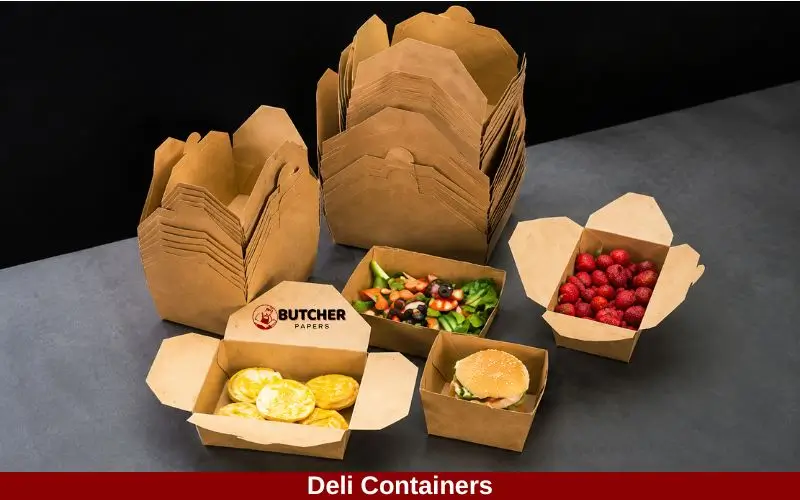
Modern kitchens, restaurants, catering businesses, and meal preparation services are heavily reliant on practical food storage options. The deli container is one of the most popular products used in both commercial and residential kitchens. They are highly valued for their durability, convenience, stackable design and ability to safely store a variety of food.
These containers are used by food businesses to organize and improve food handling. They can be used for soups, sauces, meal prep ingredients or restaurant takeout orders. Because of the increasing demand for reliable kitchen supplies, many restaurants and food packaging companies now choose packaging providers like Butcherpapers.com to provide food storage and packaging.
What are Deli Containers?
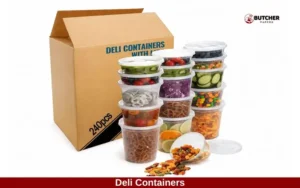
Plastic food containers, also known as deli containers, are commonly found in restaurants, supermarkets, catering services and even home kitchens. The lids are usually designed to seal the container and help keep food fresh.
They are very popular because they’re lightweight, stackable, and can be used to store both hot and chilled foods. They are used by many food businesses for packaging takeout, ingredient preparation and food organization. They are ideal for commercial kitchens that require speed, cleanliness and efficiency in storage.
Buy Deli Paper
Common uses of Deli containers
These containers are versatile and can be used for a variety of storage purposes.
Food Storage
Containers are used in restaurants and homes to store vegetables, sauces cooked meats and leftovers.
Meal Preparation
For portion control and weekly meal preparation, stackable containers are often used by busy families and fitness enthusiasts.
Soup and Sauce Storage
Leak-resistant lids make it easier to store soups, gravies and curry sauces.
Restaurant Takeout
Takeout restaurants often package salads and other side dishes, such as desserts, in food containers that are secure.
Deli containers come in many different types.
Depending on the storage requirements and food service needs, different styles are available.
Plastic Deli Containers
The plastic versions are the most popular because they are light and inexpensive.
Microwave safe containers
Certain food-grade containers can withstand microwave heating temperatures without harm.
Freezer Safe Containers
The use of freezer-safe options helps to prevent cracking in cold storage.
Disposable Deli Containers
In takeout and catering services, disposable versions are often used.
Reusable Deli Containers
Reusable models can be used for multiple food storage applications.
Different Sizes of Deli Containers
Food containers come in several standard sizes to support different portion requirements.
| Container Size | Common Use |
| 8 oz | Sauces and dressings |
| 16 oz | Soups and side dishes |
| 24 oz | Meal prep portions |
| 32 oz | Large food storage |
| 64 oz | Bulk ingredient storage |
Restaurants often keep multiple sizes available to improve kitchen organization and portion control.
Deli containers have many benefits.
The containers are ideal for both food business and home kitchens.
- Stackable design saves storage space
- Leak-resistant lids reduce spills
- Lightweight construction improves handling
- Transparent material allows quick food identification
- Both cold and hot food can be prepared with this product
- Takeout and meal preparation made easy
Commercial kitchens, in particular, benefit from organized storage systems for ingredients.
Buy Wax Paper
Can Deli Containers be microwaved?
Microwave-safe plastic food containers can be found in many types, depending on the manufacturer’s guidelines and the quality of material used. Containers marked microwave-safe are designed to withstand high temperatures. Nevertheless, microwaves or extremely high temperatures can damage certain plastics.
Always read the instructions on the packaging before you heat food.
Can Deli Containers Be Reused?
Many reusable containers can be used repeatedly if they are cleaned correctly after each use. Many meal preppers and food businesses are turning to reusable options in order to reduce waste and costs.
Disposable containers can weaken with repeated microwave heating and dishwasher cycles.
Deli Containers and Food Storage Containers
There are some important differences between standard food storage containers and deli-style containers. Containers are often chosen by restaurants, catering companies, and meal preparation businesses based on their storage requirements, kitchen organization and durability.
Commercial kitchens use deli containers because they are light, stackable and easy to arrange on shelves or in refrigerators. In contrast, standard food storage containers are found more often in home kitchens. They are available in a variety of shapes and sizes.
| Feature | Deli Containers | Standard Food Storage Containers |
| Shape | Usually round | Various shapes |
| Stackability | Excellent | Moderate |
| Commercial Use | Very common | Less common |
| Cost | More affordable | Often higher |
| Lid Compatibility | Standardized | Brand-specific |
The biggest selling point of the containers is the uniformity of their lids. In many commercial kitchens, different sizes of containers can share the same lid which optimizes storage and kitchen operations. This can allow restaurant employees to save time during busy periods.
One more significant advantage is stackability. Deli containers are stackable to help save space in refrigerators, freezers and storage rooms. For businesses that deal with a lot of prepared ingredients, a stackable food container is crucial to keep things organized and clutter free.
Typical food storage containers will often have more materials and design options but could be more expensive and may need various lids for different sizes. This can cause a problem in hectic kitchens where it is important to be efficient.
Best Deli Containers for Restaurants
Typical criteria for selecting storage containers for restaurants are durability, non-leakage and stackability.
Quality containers by trusted packaging companies like butcherpapers.com. can assist establishments in the food handling and takeout processes.
Some of the more popular restaurant options include:
- Microwave-safe plastic containers
- Heavy-duty reusable containers
- Leak-resistant soup containers
- Use clear containers for ingredients;
During food transportation and storage, reliable food packaging is important to ensuring the food quality.
How to Choose the Right Deli Containers
When shopping for food storage containers, there are a number of things you should take into account.
Material Quality
Food grade plastic materials offer improved durability and improved food storage safety.
Lid Compatibility
Secure-fitting lids minimise spills and keep food fresher for longer.
Leak Resistance
Soups, sauces and foods that are liquid based are particularly sensitive to leaks.
Heat Resistance
Use microwave-safe products to reheat ready-to-eat food safely.
Eco-Friendly Deli Container Options
Businesses are increasingly becoming interested in eco-friendly packaging options.
Some of the options available for a green choice include:
- Recyclable plastic containers
- BPA-free materials
- Compostable food containers
- Heavy-duty, re-usable storage containers.
In recent years, there has been a growing emphasis on sustainable packaging in the restaurant and food delivery sectors.
How to Store Food Properly in Deli Containers
Appropriate food storage practices promote food safety and food freshness.
Wait about 10 minutes to cool the hot food slightly before putting it in the container.
- Label containers with preparation dates
- Don’t over fill liquid foods
- Store raw and cooked foods separately
- Store foods in the refrigerator at the correct temperatures
- Labeling systems can be employed to make inventory management easier in professional kitchens.
Here’s a list of industries that frequently utilize deli containers. These are the industries that commonly use Deli Containers.
Industries That Commonly Use Deli Containers
Many industries rely on stackable food storage containers daily.
| Industry | Common Usage |
| Restaurants | Ingredient storage and takeout |
| Catering Services | Meal packaging |
| Grocery Stores | Prepared foods |
| Meal Prep Businesses | Portion-controlled meals |
| Bakeries | Frosting and fillings |
| Home Kitchens | Leftovers and meal prep |
The demand for reliable food packaging continues growing across commercial food industries.
Wholesale Deli Containers Buying Guide
Bulk purchasing can reduce long-term packaging costs for businesses.
When buying wholesale containers, businesses should consider:
- Material durability
- Lid seal quality
- Microwave compatibility
- Container sizes
- Bulk pricing options
- Shipping reliability
Restaurants and catering services often work with trusted suppliers like butcherpapers.com for large-volume packaging needs.
Best Practices for Cleaning Reusable Deli Containers
Good cleaning helps to maintain food safety and can help to prolong the life of containers.
- Empty the containers after using them.
- Wash with warm water and soft soap.
- Get rid of stains as soon as possible, so that there won’t be any lingering smells.
- Let containers dry out thoroughly before stacking.
- Immediately replace containers that are cracked or damaged.
Dishwasher-safe models can make cleaning up any busy kitchen easier.
Conclusion
For the restaurant, catering industry, grocery stores and home kitchens, the deli container remains an incredibly versatile food storage solution. They are stackable, leak-proof, not expensive, and flexible to package soups, sauces, meal preparation, leftovers, and takeout foods.
Selecting containers that can stand up to repeated use and are safe for food from a reputable packaging company like butcherpapers.com can enhance food storage and help to organize the kitchen. These containers are still essential in modern-day food storage systems, whether for commercial food service or home cooking and dining.
Frequently Asked Questions
Are the Deli Containers BPA Free?
Numerous plastic containers that are used for food products are now BPA free, however, it’s essential to check with the manufacturer or read the label on modern containers.
May Deli Containers be put in the Dishwasher?
Some are dishwasher safe, but may be affected over time when used repeatedly.
How Many Sizes Are There For Deli Containers?
Typical sizes are 8 oz, 16 oz, 24 oz, 32 oz and larger bulk storage.
Can you safely use Deli Containers for Hot Food?
Yes, there are a whole lot of containers that are made specifically for hot foods – particularly the microwave safe ones.
Is it possible to recycle Deli Containers?
Depending on local recycling regulations and plastic types, some plastic containers can be recycled.
Is the Deli Container a Good Meal Prep Container?
Yes, they are used a lot in meal prep, as stacking is easy and helps with serving sizes.
Can Deli Containers Stop Leaks?
Good quality containers and secure lids minimise spills and leakages during storage and transport.