
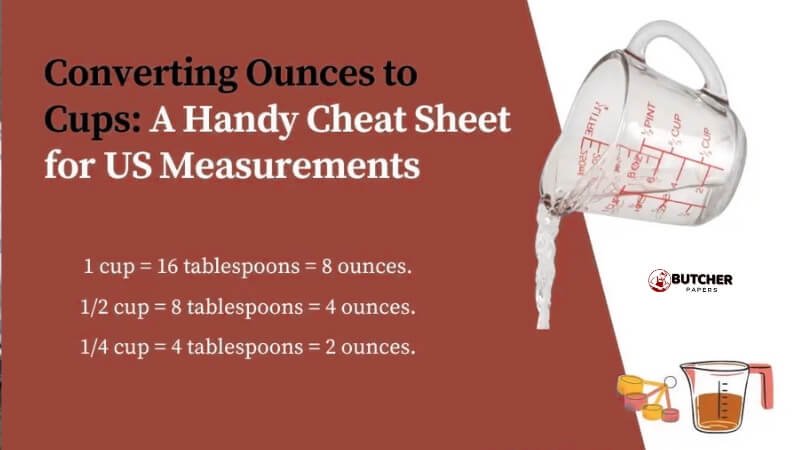
Understanding kitchen measurements will transform how you prepare food, cook or bake. Knowing how many ounces are in a cup is one of the most frequently asked questions. This simple conversion will make your recipes more consistent. Understanding how volume is related to ounces will help you follow recipes, adjust serving size, and create your own without being confused by confusing measurements.
Understanding Ounces In A Cup The Basic Breakdown
Understanding how to convert cups into ounces will help you measure ingredients accurately. The right measurements are essential for a successful recipe, whether you’re making a sauce, preparing batter or dividing liquids.
In the course of everyday tasks in the kitchen, it is not uncommon to ask questions such as how many ounces there are in a standard cup. It is closely related to another common question, such as how many oz are in a standard cup. This helps distinguish between volume and weight. While cups are used to measure volume, Ounces in a cup can be used for liquid volume or dry ingredients.
Let’s look at some of the conversions that you might encounter to make it easier for you to understand.
The Common Cup to Ounce Conversions explained
Knowing how to convert gives you more flexibility in following recipes. Knowing the equivalents helps you to adjust when you don’t have the exact tool.
Standard Cup Conversion
The standard measurement system is used in most recipes.
- 1 cup = 8 fluid ounces
This simple conversion is the basis for all of the other information you will find in this guide.
It may seem simple, but the concept of oz per cup is one that will ensure consistency when you are measuring liquids like milk, water or oil.
How many ounces are in other cup sizes?
When recipes call for smaller or larger quantities, different measurements are needed. Each of the questions below is a scenario that you might encounter.
How many ounces is in a cup-and-a-quarter?
This is useful when you are adjusting recipes and increasing serving sizes.
How much is 1/4 cup in ounces?
This measurement is often used in baking, sauces and dressings. This measurement is often used in sauces, dressings, and baking.
1/4 cup in ounces
It is important to learn measurements by repetition.
What is the ounce equivalent to 1 2 cups?
This is one of the most popular mid-range conversions.
How many ounces is a cup?
The answer is 8 fluid ounces.
Use Common Values to Create Examples
It may be necessary to convert specific ounces into cups.
Eight ounces equals cups
This simplifies the preparation of both beverages and food.
8oz to cups
This is the same as 1 cup.
Why accurate conversions matter
Accurate measurements are crucial to more than just following instructions. They impact:
Texture
When liquids and dry ingredients have been measured accurately, baked goods will rise properly.
Flavor balance
The intensity of the seasoning, sweetness or richness can be altered by adding or removing liquid.
Consistency
When measurements are standardised, your dish will always turn out the same.
Efficiency
Conversions can be used to reduce the need for searching charts or trial and error when cooking.
Understanding conversions, such as how many ounces there are in a cup, can help you feel more confident and take control of your kitchen.
How to Measure Correctly Using Cups and Ounces
Proper technique is still important, even with the correct conversions. The wrong tools and incorrect measuring can cause a recipe to fail. Here’s a guide to measuring accurately:
The Right Measuring Tools
- The liquid measuring cup has a spout that allows you to measure at eye-level.
- Fill dry measuring cups to the top, then level them.
Check for Liquids in the Meniscus
If you are measuring liquids such as water, oil, milk or broth, make sure the liquid reaches the meniscus, the curved surface of the liquid.
Do not pack unless required
It is not necessary to pack dry ingredients such as flour into a cup, unless the recipe specifies so. The weight of the cup can be dramatically increased by packing.
Level Dry Ingredients
Use a flat tool to create a straight, even top line for flour, sugar and other similar ingredients.
Convert when Tools are Not Available
You can use ounces and smaller portions if you don’t happen to have a cup handy.
There are many everyday scenarios where cup-to-ounce conversions can help.
These concepts are applicable in many situations.
Baking Recipes
For the best texture and structure, muffins, cakes, cookies and pastries depend on exact liquid amounts.
Meal Preparation & Portion Control
Knowing how many ounces in a cup can help you manage your calorie intake and divide meals more evenly.
Beverage preparation
Smoothies, coffees, teas and protein shakes are usually made with exact proportions.
Prepare soup and sauce
Accurate measurements are essential when adjusting the consistency of liquid-based dishes.
Crafting & DIY Projects
To make soap, candles, or resin art, you will need to use precise volume measurements.
Butcherpapers.com has a wide range of high-quality products that are suitable for both beginners and experts.
The Best Tips to Get Perfect Measuring Results
Consider these techniques to improve your accuracy:
Digital scales are the best option when possible
Although cups and ounces help with volume, weighing ingredients ensures unmatched precision–especially for baking.
You can also write down your own conversions.
A quick reference list can help you speed up your process when in a rush.
Understand Ingredient Density
Some ingredients are heavier or lighter per cup. A cup of honey, for example, is heavier than water. This knowledge will help you to adjust more effectively.
Use Consistent Tools
You can predict your results if you use the same measuring cup.
Practice Repeat Recipes
Repeating values, such as 8oz and cups, will help you to memorize them. This will make your measurements easier over time.
Why Ounces are Better than Cups
Sometimes, measuring in ounces can be more accurate.
- Working with sticky liquids
- Weights are listed in recipes.
- Adjusting recipes for large batches
- Avoid air pockets when using ingredients such as flour
- You want accuracy at its highest level
The use of ounces in recipes is a great way to ensure that you get predictable results.
Selecting the Right Tools and Supplies
The use of quality tools will make measuring easier. Durable products, whether they are packaging materials or kitchen prep supplies, can improve your workflow. Butcherpapers.com offers a wide range of kitchen-safe wrappers, papers and prep materials that are suitable for home or professional use.
Conclusion:
Understanding the relationship between cups, ounces and other measurements is one of those skills that anyone who works with recipes can learn easily. Understanding how to convert 8 ounces into cups, or how many ounces are in a 1/4 cup and other related measurements will give you confidence and accuracy when preparing your dishes. These conversions will help you succeed whether you are adjusting serving sizes or creating new recipes.
Related Article: How many ounces in a cup and a quarter
Related Article: How Many Tablespoons in 1/4 Cup
Related Article: How many tablespoons in a cup
Related Article: How many ounces are na cup
Related Article: How Many Ounces in a Cup
Related Article: How Many oz in a cup
FAQ
What is the basic conversion from ounces into cups?
One cup equals 8 fluid ounces.
Are dry and liquid ounces the same size?
Dry ounces are weighted, whereas liquid ounces are volumetric. They’re not always the same.
What is the best tool to use when measuring liquid ounces of a product?
Use a measuring cup that is clear and has measurement lines.
Does baking require the conversion of ounces into cups?
It is important to ensure that the texture, rise and consistency of your product are correct.
How can I convert ounces into cups without measuring instruments?
Knowing the basics of conversions allows you to measure with alternative tools and estimates.