
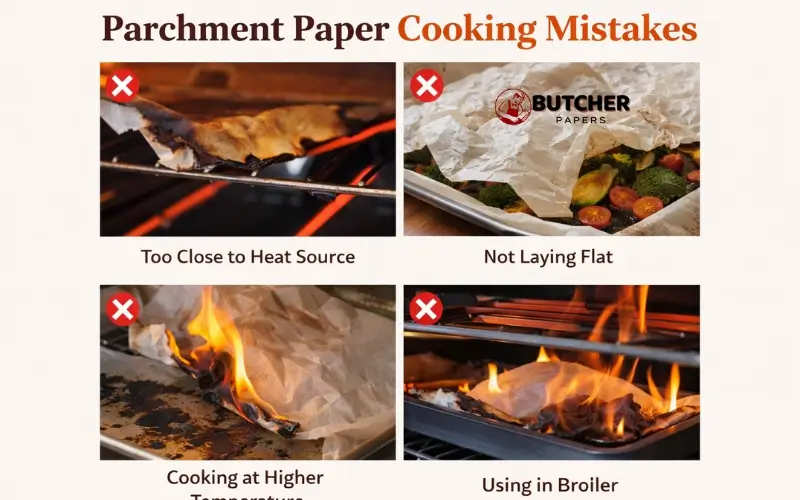
It is now a standard practice in commercial and home kitchens. It reduces the amount of time needed to clean up and helps improve cooking consistency. Many people make serious mistakes when cooking with Parchment Paper Cooking Mistakes that can have a negative impact on food safety and quality.
Understanding the proper way to use parchment is important, whether you’re baking cookies, roasting veggies, or cooking meat in the oven. Even small mistakes, such as mistaking parchment paper for wax paper or incorrectly placing it in the cookware, can have disastrous results.
This will explain how to use parchment paper in a professional kitchen safely. It will also show you how to avoid common problems.
What is Parchment paper?
The parchment paper is heat resistant and non-stick. It’s designed for baking and cooking. It’s treated with silicone, making it resistant to moisture and heat. This allows the food to cook evenly on trays or pans without sticking.
The use of parchment paper is common in professional kitchens, bakeries and food businesses. It simplifies the cooking process and improves the presentation of food.
Incorrect use of parchment paper can lead to food sticking, burning, and smoke. It is important to learn how to use parchment paper correctly. This will help you avoid many kitchen issues.
What causes these cooking problems?
Most kitchen mistakes are made because people assume that parchment paper is able to handle all cooking conditions. The temperature ranges and guidelines for using parchment paper are specific.
These problems are caused by:
- Temperature limits are not understood
- Mistaking parchment paper for wax paper
- It can be used incorrectly on air fryers and grills
- Place parchment paper incorrectly on trays
- Use of low-quality parchment papers
These issues can easily be avoided by using the correct knowledge and preparation in your everyday cooking.
The Most Common Mistakes in Cooking with Parchment Paper
When working with parchment, Can You Put Parchment Paper in the Microwave make the same mistakes. These small mistakes can have a big impact on the results of your cooking.
Use Parchment Paper above its Heat Limit
The most common mistake is to exceed the recommended temperature limit.
The majority of parchment papers are designed to handle temperatures ranging from 420degF to 450degF (230degC-420degF). The paper will start to curl, burn, or brown if the temperature of the oven exceeds this limit.
Professional chefs always check the recommended heat tolerance of the manufacturer before using parchment paper for high-temperature baking.
Mistaking Parchment Paper for Wax Paper
A common mistake is to confuse parchment paper and wax paper. Although they may look similar, their purposes are completely different.
Wax paper has a thin coating of wax that can smoke and melt in the oven.
If you use wax paper in place of parchment paper, it can cause food to spoil and smoke in the cooking area.
Secure the paper properly
Using convection ovens and air fryers, loose parchment paper can cause the food to move around.
The food can cook in an uneven manner if the Parchment Paper Cooking Mistakes move during cooking. It may also touch the heating element.
Professional chefs trim parchment paper to perfectly fit the pan to prevent movement during cooking.
Use Parchment Paper to Direct Flame
The parchment paper can be used in ovens and baking pans, but it should not be placed on stovetop burners or open flames.
The direct flame can easily burn parchment paper, causing it to smoke. By understanding these limitations, you can ensure that your cooking is safer.
The Differences Between Parchment Paper and Wax Paper
By understanding the differences between wax paper and parchment paper, you can avoid many kitchen problems.
| Features | Parchment Paper | Wax Paper |
| Heat Resistance | High heat resistant | Heat resistant |
| Oven Safe | Yes, | No, |
| Non-stick Surface | Yes, | Yes, |
| Baking Use | Perfect for roasting and baking | Not recommended for baking |
| Cooking Safety | Safe for ovens | Wax coating may melt |
It is a common mistake made by beginners who use parchment paper instead of wax paper.
How professional kitchens avoid cooking errors
Professional chefs adhere to strict kitchen procedures in order to cook safely and efficiently.
These techniques improve the quality of your cooking and lower the likelihood of having a kitchen problem.
Proper Temperature Control
When using parchment paper, professional kitchens adhere to safe temperature limits. This will ensure that the parchment paper doesn’t burn or degrade while cooking.
Correct Pan Lining Techniques
The chefs carefully cut parchment paper into the exact shape and size of baking pans and trays. It prevents food from moving during cooking.
Use High Quality Cooking Material
The quality of the parchment paper is important because it will perform better and less likely to burn or tear.
Many commercial kitchens, for example, rely on butcherpapers.com to source professional-grade cooking and food wrapping paper.
Avoiding unnecessary kitchen problems by using reliable materials is important.
The Best Uses of Parchment Paper
When used properly, parchment paper is a great tool for many different cooking situations.
Baking
To prevent cookies and pastries sticking, bakers line baking trays with parchment.
Roasting Vegetables
Vegetables can be roasted on parchment paper to prevent sticking and for easy cleanup.
Cooking Meat
The parchment paper helps to prevent juices from sticking on the roasting tray when roasting meat. It also simplifies cleaning.
Air Fryer Cooking
Air fryer recipes often use parchment paper lined liners that are perforated to keep food from sticking and maintain airflow. Sometimes incorrect placement can cause cooking problems.
Parchment Paper Safe Temperature Guide
The ability to recognize the temperature is key in avoiding common parchment paper mistakes.
| Cooking Method | Recommended Temperature | Safety Level |
| Baking Cookies | 325degF – 375degF | Safe |
| Roasting Vegetables | 375degF – 425degF | Safe |
| Roasting Meat | As low as 425degF | Safe |
| High Heat Broiling | Above 450degF | Not Recommended |
By following these guidelines, you can prevent burning and cook safely.
How to avoid cooking problems
Simple kitchen habits can help prevent many common problems with parchment paper.
Some helpful practices include:
- Always check oven temperature limits
- Trim parchment paper to pan size
Never use parchment paper on direct flames - Do not place paper near heating elements
- High-quality parchment papers
These tips will help you to improve your cooking and reduce problems in the kitchen.
How to use parchment paper properly
When used correctly, parchment paper can increase cooking efficiency and decrease kitchen cleaning.
Making Cookies and Pastries
Parchment paper is used to prevent butcherpapers.com cookies and pastries sticking to baking trays.
Roasting Vegetables
When vegetables such as broccoli, potatoes, and carrots are placed on parchment lined trays, they will roast more evenly.
Cooking Fish
Most chefs use parchment paper to cook fish because it keeps the food moist and prevents delicate food from sticking.
Line cake pans
To ensure that cakes are easily released from pans after baking, many bakers line them with parchment paper.
These methods, when used correctly, can reduce cooking consistency and improve it.
FAQs
What is the safe temperature for parchment paper
The majority of parchment paper is safe between 420degF and 450degF. Temperatures higher than this range can cause burning or browning.
Can parchment paper catch on fire in an oven?
Under normal conditions, it rarely catches on fire. However, exposing the oven to direct flames or exceeding the heat limit can cause it to burn.
What is the difference between parchment paper and aluminum foil when baking?
Aluminum foil is mainly used for heat reflection and moisture storage. Parchment paper has a non-stick coating and helps to prevent food from sticking.
Can parchment paper be re-used?
You can reuse parchment paper if you don’t burn it or grease it heavily after cooking.
Why does parchment paper curl up in the oven
When parchment paper is not properly secured or exposed to high temperatures, it can curl.