
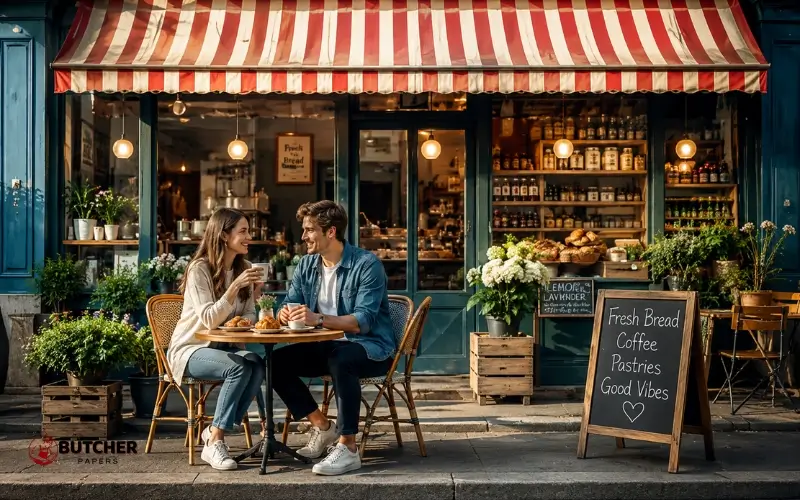
The storefront of a food establishment is usually the first point of contact that customers have with an enterprise. Customers form opinions about a storefront before tasting the product, talking to staff or reading the menu. The storefront is important for attracting customers and influencing their purchasing decisions, whether it’s a bakery or deli, a cafe, a grocery store, a butcher shop, a restaurant, etc.
A storefront today is more than just an entrance in the highly competitive food retail industry. The storefront is a marketing tool, branding asset and driver of customer experience. Signage, window displays, packaging, and product presentations all contribute to the perception of a business by customers.
A well-designed storefront is a great way to increase visibility, build customer trust and promote long-term growth for food businesses in the United States.
Quick Facts About Storefronts of Food Stores
| Element | Impact on Business |
| Store Signage | Brand recognition and visibility are improved |
| Window Displays | Attract walk-in customers |
| Exterior Design | First impressions are important |
| Product Presentation | Influences on purchasing behavior |
| Food Packaging | Strengthens branding |
| Lighting | Enhances appearance and safety |
| Accessibility | Enhances customer convenience |
| Local SEO | Online visibility can be increased |
Why the front of a food store is important
When choosing where to purchase food, consumers often make a decision within seconds. A neat, professional and visually appealing storefront will encourage customers to enter, whereas a neglected exterior can discourage them.
Successful food storefronts can help businesses.
- Building customer trust
- Increase foot traffic
- Brand awareness is important to increase brand recognition
- Encourage impulse purchases
- Repeat business is important
- Local reputation can be strengthened
The storefront is a cost-effective tool for independent food retailers.
First impressions: The psychology behind them
The human brain is a visual creature. It makes judgments on the basis of information. Consumer behavior research consistently shows that the first impressions influence purchasing decisions.
Customers immediately assess a storefront when they see it:
- Cleanliness
- Product quality
- Professionalism
- Safety
- Price expectations
Modern bakeries Paper bwith appealing displays and quality branding are often more trusted than competitors with faded signs or poor maintenance. Customers often believe that a well-maintained shopfront is better for food quality because food safety and freshness concerns are so important.

Essential Elements for a Successful Food Storefront
Attractive Signage
The first thing that customers notice is the signage.
Signage should be:
- Display the name of your business clearly
- Use fonts that are readable
- Be visible at a distance
- Brand identity
- Keep your lights on when needed
Signage that is visible and prominent helps customers find your business.
Window Displays
Window displays are a great way to display products and attract customers before they enter the store.
Window displays are often used by food businesses to showcase their products.
- Fresh baked goods
- Seasonal Items
- Signature Menus
- Special Promotions
- Limited time products
A visually appealing display attracts more people to the store.
Exterior Cleanliness
Storefronts should always be clean and well-organized.
Attention to customers:
- Windows
- Sidewalks
- Entryways
- Outdoor furniture
- Landscaping
Even minor maintenance issues can have a negative impact on customer perception.
Lighting
Proper lighting can make a storefront look more welcoming.
Good lighting helps:
- Increase visibility
- Highlight Products
- Increase in nighttime traffic
- Safety is a priority
For bakeries and cafes it is often best to use warm lighting, while brighter lights are preferred in grocery stores and quick service restaurants.
Food Storefront Branding Strategies
Branding is more than just a logo. Each visual element should reflect the identity and values of the business.
Branding success includes:
- Consistent colors
- Professional Signage
- Unpacking uniform packaging
- Cohesive design elements
- Customer experiences that will stay with you forever
Customers will remember companies that are consistent in their visual branding across all touchpoints. A premium food retailer might use sophisticated packaging and storefront design while a deli geared towards families may emphasize warmth and community appeal.
There is a link between packaging and storefront success
Packaging and storefront marketing are often overlooked by businesses. Packaging is an extension of a storefront’s experience. Customers who leave the store with branded packaging, food baskets or takeaway packaging continue to promote the business even after they have left the store.
Popular packaging solutions include
- Custom butcher paper
- Deli paper
- Food basket liners
- Branded wrapping papers
- Takeout packaging
These materials create a professional look while reinforcing the brand’s identity. When businesses invest in high-quality food packaging, they often improve their brand recognition and create a stronger impression on customers.
How product presentation influences sales
The presentation of food is a key factor in the decision-making process for customers. Products that are presented professionally and look appealing to customers tend to be purchased more often. Product presentation is affected by several factors:
Display Organization
The products should be neatly arranged and logically grouped.
Clear organization helps customers:
- Browse the store
- Find products quickly
- Compare your options
- Make purchasing decisions
Color and Visual Appeal
Visual contrast and attractive arrangements are important for food displays. When presented in an attractive way, fresh fruits, baked goods and meats sell more.
Packaging Quality
Packaging of high quality enhances the perceived value. Premium packaging is often associated with high-quality products. This perception can justify higher prices while improving customer satisfaction.
Design trends for food stores in the United States
As consumer tastes change, food retail trends are evolving. In recent years, several storefront trends gained in popularity.
Transparent storefronts
Openness and transparency are created by large glass windows.
Customers love being able:
- Product displays
- Areas for food preparation
- Interior atmosphere
- Customer Activity
Transparency is important for building trust and confidence.
Outdoor Dining Areas
Outdoor seating is increasingly used by restaurants and cafes to create welcoming spaces and attract customers. Outdoor dining increases visibility and enhances customer experience.
Sustainable Design
Environmentally responsible businesses are increasingly valued by consumers.
Many storefronts today incorporate:
- Lighting that is energy-efficient
- Recycling materials
- Sustainable packaging
- Signage that is Eco-friendly
Sustainability initiatives can enhance brand reputation and appeal to environmentally conscious consumers.
Common food storefront mistakes
Unintentionally, many food businesses reduce their appeal to customers by making mistakes that are easily avoidable.
Poor Maintenance
Negative impressions are created by dirty windows, damaged signage, and neglected entranceways.
Weak Branding
Businesses that use inconsistent colors, fonts and messaging are less memorable.
Old Displays
Stale promotions, outdated window displays and out-of-date window displays can reduce customer interest.
Lack of visibility
Poor signage and inadequate lighting can make it difficult for storefronts to attract new customers.
Packaging Ignored
Packaging quality is often overlooked by businesses when they invest heavily in the design of their storefronts.
Both are important to customers.
Measuring the performance of food stores
Storefront improvements must support business goals that are measurable.
Businesses can measure performance by using these metrics:
| Metric | Purpose |
| Foot Traffic | Customer visits are measured |
| Conversion Rate | Tracks customers who make purchases |
| Average Transaction Value | Spending behavior is measured |
| Customer Retention | Repeat business evaluation |
| Online Reviews | Reflects customer satisfaction |
| Local Search Visibility | Measures of online discoverability |
These indicators can be used to identify areas for improvement.
Small Business Food Storefront Ideas
Marketing budgets are often limited for small businesses. Many storefront improvements can be made at a reasonable cost.
Here are some practical ideas:
- Update exterior signage
- Create seasonal window displays
- Add branded packaging
- Improve lighting
- Installing outdoor menu boards
- Custom food packaging paper
- Storefront Colors Refreshed
- Showcase best-selling products
Even small improvements can have a significant impact on customer perception.
Future of Food Storefronts
Food retail continues to be shaped by technology and evolving consumer expectations.
Future storefront trends could include:
- Digital menu boards
- Ordering systems that use contactless technology
- Smart Signage
- Personalized promotions
- Interactive displays
- Sustainability practices that are enhanced
Fundamentals do not change despite technological advances. Customers still value cleanliness, convenience and quality. Businesses that have a strong brand, an attractive storefront, and professional packaging are likely to remain competitive for years to come.
Conclusion:
A food storefront represents much more than just the outside of a business. It is a powerful tool for marketing that can influence customer perception, trust and buying behavior. Every detail, from signage and window displays to product packaging and presentation, contributes to the overall customer experience. Businesses that invest in a consistent brand, quality packaging, and a storefront with aesthetically pleasing features often see heightened customer engagement.
If you run a bakery or deli, butchery, grocery store or restaurant, an attractive storefront will help to attract new customers, increase loyalty and promote long-term growth.
Read Alao: Step-by-Step Instructions From Appetizer to Dessert for a Complete Meal
FAQs
What is the front of a grocery store?
A food storefront includes signage, displays and branding as well as entrances and other visual elements that are designed to attract clients.
Why is it important to have a storefront for a food retailer?
It improves visibility and builds trust.
How can an upscale food storefront boost sales?
A storefront that is attractive encourages foot traffic, increases customer confidence and promotes impulse purchases.
What role does the packaging play at a storefront for food?
Packaging enhances the perception of quality and brand awareness by customers.
What are the best features to include on a storefront for a food business?
The most important features are clear signage, attractive displays and quality lighting.
How often should the window display be updated?
To keep customers interested, many retailers change their displays on a seasonal or monthly basis.
Small businesses can benefit from improvements to their storefronts.
Yes. Even simple upgrades, such as better signage and packaging, can improve customer engagement.
What is the relation between storefront design, branding and marketing?
The storefront design helps to visually communicate a brand’s identity, and it also helps customers remember your business.
What types of food businesses are most likely to benefit from optimizing their storefronts?
Storefront improvements can benefit all types of businesses, including bakeries, delis and butcher shops. They also include restaurants, cafes, speciality food stores, grocery retailers, and specialty food shops.